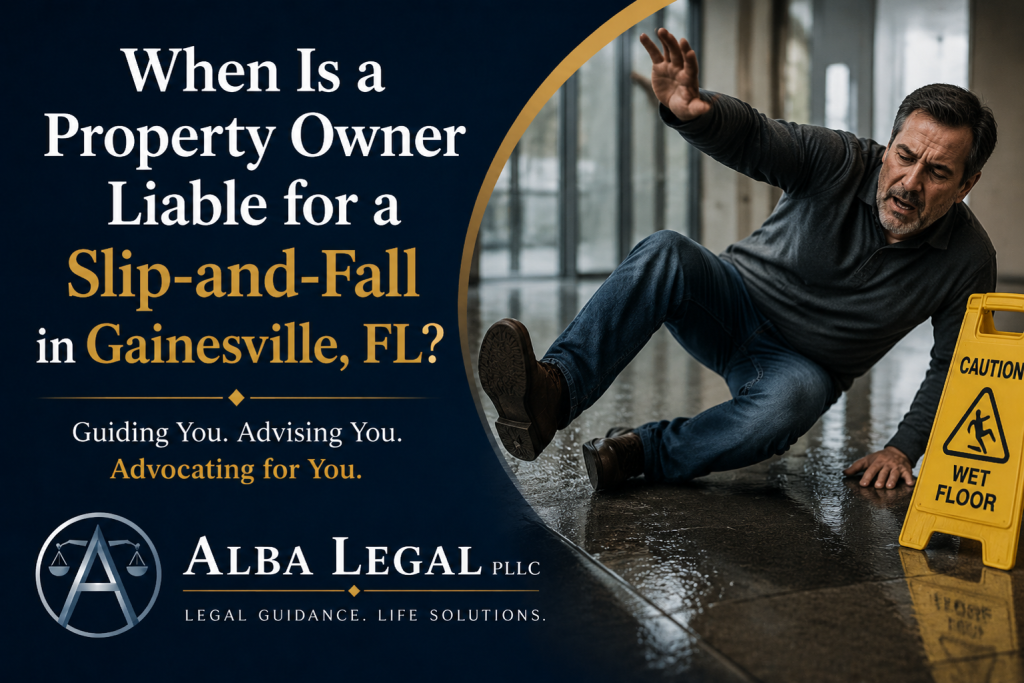
If you were injured in a slip-and-fall accident in Gainesville, Florida, you may be entitled to compensation for your medical expenses, lost income, pain and suffering, and other damages. Under Florida premises liability law, property owners and businesses have a legal duty to maintain reasonably safe conditions for visitors. When they fail to do so, they can be held financially responsible for injuries that occur on their property.
An experienced personal injury attorney can help determine whether a negligent property owner may be liable for your injuries and guide you through the claims process.
When Is a Gainesville Property Owner Liable for a Slip-and-Fall?
In Florida, a property owner, property manager, or business operator may be liable when their negligence causes a dangerous condition that leads to a slip and fall accident.
Common hazards that often lead to accidents include:
- Wet or slippery floors
- Uneven sidewalks or walkways
- Broken stairs or missing handrails
- Poor lighting in parking lots or stairwells
- Loose flooring or torn carpeting
- Spilled liquids in grocery stores or restaurants
- Debris or obstacles in walkways
Florida law requires many property owners and businesses to take reasonable steps to inspect their property, correct hazards, and warn visitors of known dangers.
Your Visitor Status Matters
The level of responsibility a property owner owes depends on why you were on the property at the time of the accident. Florida law generally recognizes three categories of visitors: invitees, licensees, and trespassers.
Invitees
Invitees receive the highest level of legal protection. These are individuals who enter a property for business purposes or because the property is open to the public, such as:
- Customers in stores
- Hotel guests
- Restaurant patrons
- Patients visiting medical offices
Property owners must regularly inspect the premises for dangerous conditions, repair hazards promptly, and provide adequate warnings when dangers cannot immediately be fixed.
Most slip-and-fall claims involve invitees injured at businesses, shopping centers, apartment complexes, or public establishments in Gainesville.
Licensees
Licensees are people who have permission to enter a property but are there primarily for their own convenience or social purposes. Examples include:
- Social guests
- Friends visiting a residence
- Delivery drivers
Property owners generally must warn licensees about known dangers that may not be obvious. However, they are not always required to inspect the property for unknown hazards.
For example, if a homeowner knew about a broken porch step but failed to warn a guest, they could potentially be liable for resulting injuries.
Trespassers
Under Florida law, property owners typically owe limited duties to trespassers. In most cases, they are only liable for intentional misconduct or gross negligence that causes harm.
However, different rules may apply in situations involving children or particularly dangerous conditions.
What Must Be Proven in a Florida Slip-and-Fall Claim?
To recover compensation in a Florida premises liability case, you generally must establish several key elements.
Actual or Constructive Knowledge
Florida law requires injured victims to prove the property owner had knowledge of the dangerous condition.
- Actual knowledge means the owner or employees were aware of the hazard before the accident occurred.
- Constructive knowledge means the dangerous condition existed long enough that the owner should have discovered it through reasonable inspections.
For example, if a spill remained on a grocery store floor for an extended period without being cleaned, the business may be considered to have constructive knowledge of the hazard.
Dangerous Condition Created an Unreasonable Risk
The hazardous condition must present an unreasonable risk of harm. Minor imperfections or everyday conditions may not be enough to support a claim.
Examples of potentially dangerous conditions include:
- Large potholes
- Hidden tripping hazards
- Recently mopped floors without warning signs
- Broken staircases
- Unsafe walkways
Failure to Use Reasonable Care
You must also show the property owner failed to take reasonable action to:
- Repair the hazard
- Clean up the dangerous condition
- Warn visitors of the danger
A failure to act reasonably can establish negligence in a slip and fall case.
Causation and Damages
Finally, you must prove the hazardous condition directly caused your injuries and damages, such as:
- Medical bills
- Lost wages
- Rehabilitation expenses
- Pain and suffering
- Reduced earning capacity
An experienced personal injury lawyer can help gather evidence, obtain surveillance footage, interview witnesses, and build a strong claim on your behalf.
Common Places Where Slip-and-Fall Accidents Happen in Gainesville
Slip-and-fall accidents can occur almost anywhere, including:
- Grocery stores
- Shopping centers
- Restaurants
- Apartment complexes
- Hotels
- Parking lots
- College campuses
- Sidewalks and public walkways
Because Gainesville is home to busy retail areas, medical facilities, and the University of Florida community, property owners throughout the area must remain vigilant about maintaining safe premises for residents and visitors.
What to Do After a Slip-and-Fall Accident
After a slip and fall accident, taking the right steps can help protect your health and your legal rights:
- Seek medical attention immediately
- Report the incident to the property owner or manager
- Take photographs of the hazardous condition
- Collect witness information
- Preserve your shoes and clothing
- Avoid giving recorded statements to insurance companies without legal guidance
- Speak with a qualified personal injury attorney
Contact Alba Legal PLLC Today
If you were injured in a slip-and-fall accident in Gainesville, FL, Alba Legal PLLC is ready to help you understand your rights and pursue the compensation you may deserve.
Our legal team is committed to helping injured victims throughout Gainesville and surrounding Florida communities with aggressive and compassionate representation.
Call 352-327-8726 today for a free consultation or contact us online to discuss your case.
Connect with us